Description
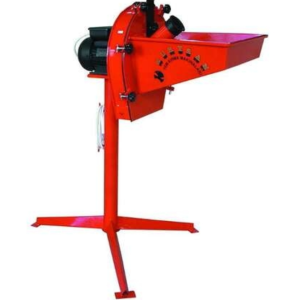
Feed Crusher
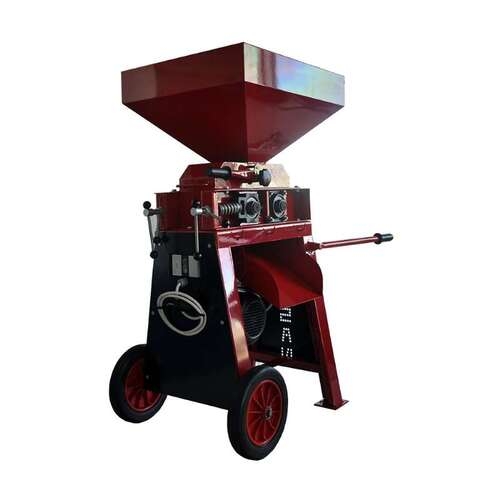
A feed roller mill is a specialized grain-processing machine used in the livestock and agro-industrial sectors to crush, grind, or flatten grains into a consistent, digestible feed. Unlike high-speed hammer mills that pulverize grain into a fine powder, roller mills use pairs of counter-rotating cylindrical rollers to compress and shear grains, preserving their nutritional structure while improving digestibility for animals like cattle, pigs, and poultry.
- Enhanced Digestibility: The gentle crushing action breaks the outer shell of grains (like corn, wheat, or barley) without reducing the interior to flour. This increases nutrient absorption and can improve feed conversion rates by 3%–15%.
- Reduced Dust and Waste: Roller mills generate up to 85% less dust than hammer mills. This prevents respiratory issues in livestock and workers and minimizes feed losses from “windblown” powder.
- Energy Efficiency: They are significantly more efficient, often using 30%–50% less power than hammer mills for the same output.
- Uniform Particle Size: Precise control over the gap between rollers allows for a highly consistent grind with fewer “fines” (very small particles), which is critical for maintaining animal health (e.g., preventing ulcers in swine)
How It Works
Feeding: Grains are introduced into the mill through a delivery device like a rotary or pocket feeder.
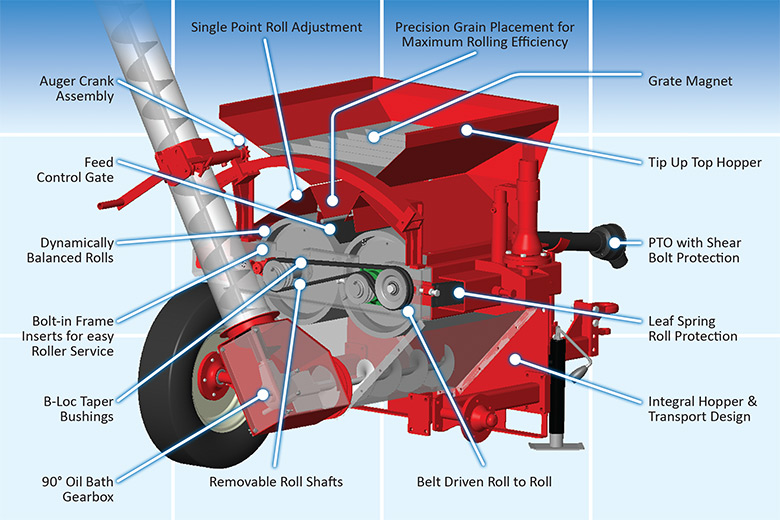
- Compression and Shear: The material passes through the “nip” between two parallel rollers rotating in opposite directions. Typically, one roller spins faster than the other, creating a shearing or cutting effect.
- Adjustment: The fineness of the grind is determined by the adjustable gap between the rollers, which can be modified manually or via automated hydraulic/pneumatic systems.
- Multi-Stage Grinding: Some configurations use double or triple sets of rollers stacked on top of each other for more refined processing or to handle different grains in one machine.
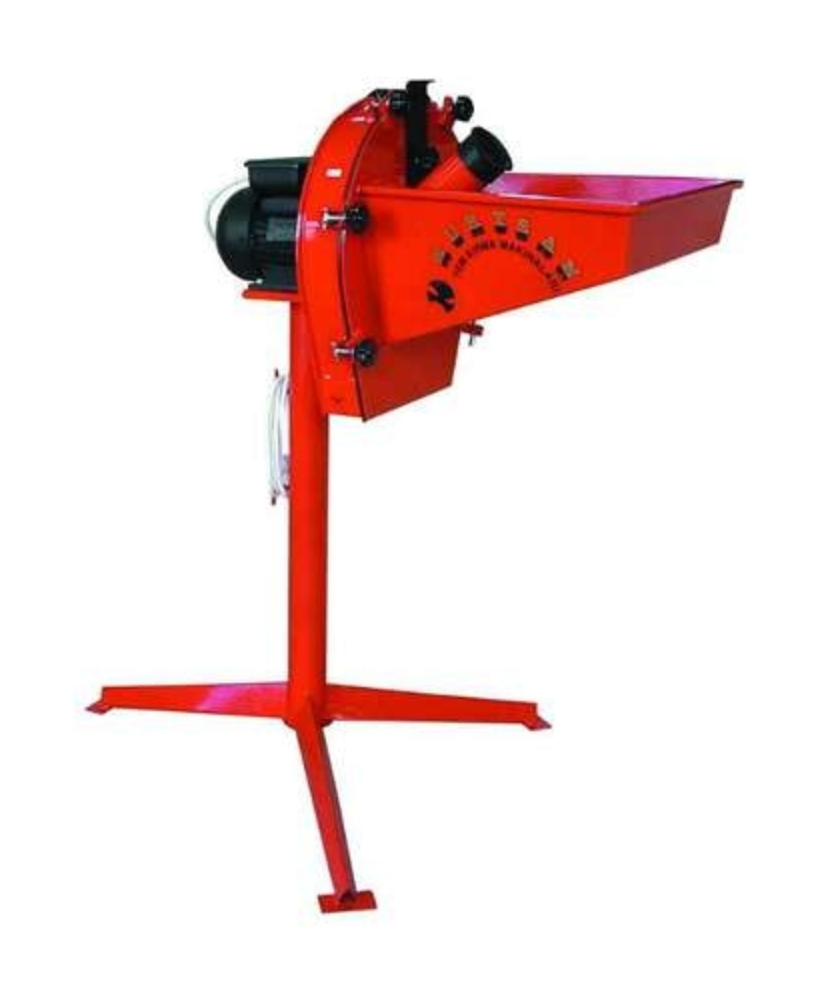
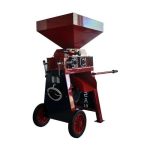
Chaff cutter and feed crusher
Chaff cutter and feed crusher machines are essential agricultural tools that used to cutting and crushing functions to process dry/green fodder, corn stalks, and grains for livestock. They increase digestibility, reduce feed wastage, and can process 300–1000kg/hour, available with electric motors or petrol/diesel engines for both small and medium-scale farming.
Specifications
Drive system: Electric
Capacity: It is between 600-1200 kg per hour depending on the crop type.
Number of revolutions: 1500 rpm
Motor power: 4 HP – 220/380 V – 3 kw – 50 Hz
Required Tractor Power: none
Number of Balls: 2
Pto Revolution: none
Other Specifications
Wheel Number: 2
Thermal Switch: 11-16 A
Dimensions: 1365X660X760 (mm)
Weight: 155 Kg.
A feed flaker (or flaking mill) is a specialized machine used in the animal feed industry to flatten grains—such as corn, barley, oats, and wheat—into thin, uniform flakes. This process, often involving heat and moisture, significantly improves the nutritional value and digestibility of the feed for livestock like cattle, sheep, and horses.
The primary goal of a feed flaker is to disrupt the grain’s crystalline starch structure, a process called gelatinization.
- Enhanced Digestibility: Flaking increases the surface area of the grain, making starches more accessible to digestive enzymes. This can increase starch digestibility from roughly 75% in cracked grains to over 95% in flaked form.
- Improved Animal Performance: Due to better nutrient absorption, livestock often see faster weight gain, higher milk production, and improved feed-to-weight conversion ratios.
- Reduced Digestive Issues: For ruminants, flaked grains stimulate more thorough chewing and saliva production, which helps maintain a stable ruminal pH and reduces the risk of acidosis or bloating.




Reviews
There are no reviews yet.