


Description
Lighting for barns
Agri Light is better light for barn Lighting, better life, welfare and profit. As a farmer your daily concerns are the welfare of your animals and their productivity. Your animals’ health is a vital issue on your list of priorities. Agri light can influence the milk production of your herd. And it can be a challenge to strike the right balance between welfare and optimal profitability. It is maybe an aspect you don’t think about every day, but lighting is an essential component of the equipment in your livestock buildings. After all, without good light you cannot do your work properly, and you might overlook vital signals that indicate the health status of your cattle.
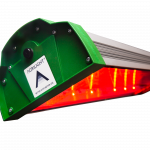
AGRILED® 3 Series Barn Lighting
Intelligent automated barn Lighting system for example for dairy cows. Benefits are, among others: scientifically proven stimulation of the milk yield (8-9% higher) at a light level of 150-200 Lux. Optionally available with red control lighting. Intelligent automated lighting systems for example for dry cows, separation areas, work lighting, low barns. Optionally available with red control lighting. Compact design, high-quality material choice and production in the Netherlands results in a low carbon footprint for the AGRILED® 3.
Dairy cattle
Dairy cattle cannot distinguish between high pressure sodium and metal halide, so only the intensity and duration of the light are important. Research has shown that the minimum light level should be 150 lux. A lighting regime of 16 hours of light at a minimum of 150 lux in dairy farms, followed by 8 hours of darkness (maximum 5 lux) will produce the positive benefits mentioned above. Using the lighting to increase the day length affects melatonin production. Melatonin is also known as the sleep hormone. Light inhibits melatonin production and darkness accelerates it. In other words, longer periods of light mean less sleep hormone and healthier, more active cows. The lighting regime in dairy farms described above simulates long summer days, the days when the cow is naturally most active, resulting in higher yields and higher feed intake.
Poultry
Chickens perceive light (colors) in a different way from humans. Humans recognize three colors: red, green and blue. In chickens the eye is one of the most highly developed senses, enabling chickens to perceive more colors. Chickens’ eyes are on the side of the head, giving them a wider field of vision than humans, whose eyes are at the front. In addition, chickens can perceive light outside the eye. They have an eye-like organ immediately beneath the skull which enables them to perceive light and dark. Chickens also have an extra sensitivity peak in the ultraviolet wavelength, which enables them to recognize each other better. This is important for the pecking order because if chickens cannot recognize each other they will peck their companions and this will disrupt the pecking order.
Goats
Extended milking
A lighting regime of 16 hours of light at a minimum intensity of 200 lux followed by an 8 hour period of darkness can extend the lactation period of dairy goats. Simulating long days in the goat house is an important factor in maintaining ‘permanent lactation’ for a number of years without kidding. This approach will reduce losses (problems during kidding, unwanted males). You can also continue ‘extended lactation’ during gestation by employing a constant lighting regime of 16 hours of light followed by 8 hours of darkness. Some advantages of these tactics over an annual dry period are:
• Continuous, year-round milk production
• Less likelihood of lingering milk fever
• Less fertile animals remain productive.
For drying off, the light in the house must be limited temporarily to 8 hours per day. To stimulate a lactation peak you should change the lighting regime from short to long days in addition to changing the feeding regime.
Fertility and rut/heat
Goats are naturally fertile and ready to mate (rutting/in heat) in the autumn. In does, the cycle and heat are influenced primarily by differences in day length, but also by temperature, presence of a buck, restlessness. You can bring some of your goats into heat earlier or outside the normal season by first maintaining a regime of 16 hours at 200 lux for a given period, and then artificially reducing the day length to 8 hours of light per day. This lighting programmed for both does and bucks stimulates simultaneous, more obvious and longer rutting/heat and the production of more and higher-quality sperm. A sophisticated lighting programme also supports hormone treatment and artificial insemination, resulting in a higher percentage of successful pregnancies. Kidding outside the season leads to the production of (fat) winter milk and makes it possible to spread the workload more evenly (all year round). With the correct light level in the house you can identify any health problems in the animals at an earlier stage.
Horses
Lighting also plays an important role in breeding because it has a significant influence on hormone levels and fertility in horses. You can extend the day length by implementing a lighting regime of 16 hours of light at a minimum level of 150 to 200 lux, thus preventing the proverbial winter dip. Mares are then more likely to come into oestrus. Horses also grow a thinner winter coat, which makes a significant difference in terms of work and costs, e.g. for rugs and clipping.
Pigs
As well as providing good working conditions, a good lighting system ensures optimum colour recognition by the animal. A good light level also means that any signs of disease can be spotted at an early stage. Lighting also stimulates growth in fattening pigs. In a nutshell, a sophisticated lighting regime makes an essential contribution to animal welfare and higher productivity.
Of course, it is important for the lighting system to be durable and capable of withstanding the climate in the house.
Product models
AGRILED® pro 16 Lumen output * 18.000 Lumen Power * 125 Watt Lumen/Watt * 144 Lm/W Light color Neutral White. Integrated red LED’s No. Dimmable: Yes. Lifespan light source: 60.000 hours.
Quality LED light bulbs last longer, are more durable, and offer comparable or better light quality than other types of lighting. Use sunlight as often as possible.


Reviews
There are no reviews yet.